You fling a spaghetti strand at the kitchen tile. It sticks. You smile. You think you’ve nailed it.
Stop.
That sticky spaghetti isn’t a sign of perfection. It’s a sign of failure. Specifically, it’s a sign that you’ve overcooked your dinner. The “wall test” is a myth baked into French kitchen lore, passed down like a reliable grandmother’s tip. But it’s wrong. Dead wrong.
In Italy, that stickiness isn’t a victory lap. It’s an indictment.
The Physics of Failure
Here is the cold, hard truth about starch: pasta releases starch into boiling water. The longer it boils, the more starch it releases. That starch creates a sticky, glue-like coating on the surface of the noodle.
So when your spaghetti clings to the wall with enthusiastic persistence, it isn’t “ready.” It is gorged with water. Its structure has collapsed. It is mushy. It has lost its flavor profile and, potentially, some of its nutritional value due to leaching into the boiling water.
The wall test doesn’t tell you when pasta is done. It tells you when pasta is broken.
The Real Test: Cut, Don’t Throw
You don’t need acrobatics. You don’t need to risk eye injuries or stained walls. You need a knife.
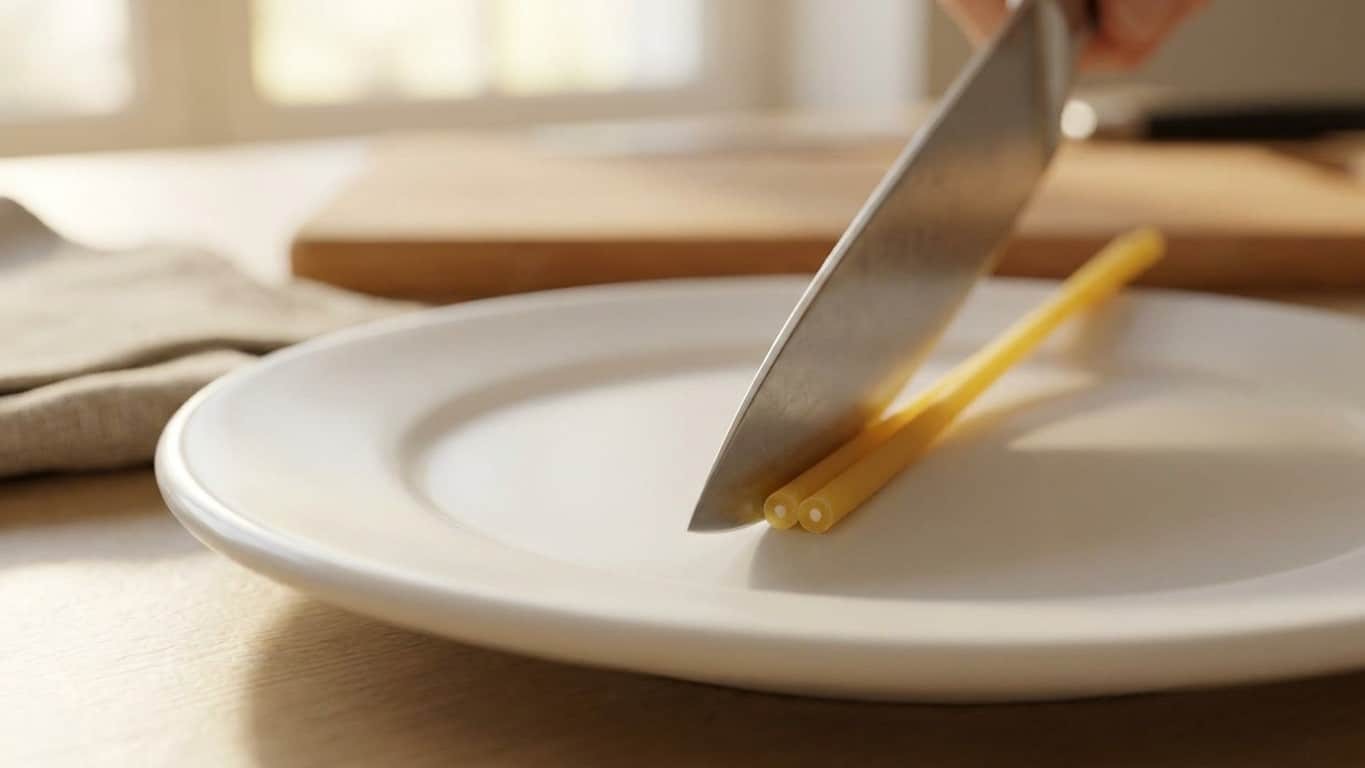
One minute before the package timer says “done,” fish out a noodle. Cut it in half. Look at the cross-section.
If you see a tiny, hard white dot in the center, it’s raw. Keep cooking.
When that white dot disappears, you hit pasta al dente.
Literally, al dente means “to the tooth.” It describes a texture that offers resistance. It’s firm under the bite. It’s not soft. It’s not mushy. It is precise. Like a watch mechanism.
This matters because Italians view overcooked pasta as a cardinal sin. Not a metaphor. A sin. And they have reasons.
Why Texture Dictates Health
It’s not just about pride or culinary purism. The texture of your pasta changes how your body processes it.
When pasta is cooked al dente, it requires more chewing. That mechanical breakdown in the mouth triggers amylase, the enzyme responsible for digesting starch. It starts the digestive process early. It slows down eating.
Overcooked pasta? It’s gelatinous. Soft. You swallow it whole. It forms a dense mass in your stomach. Harder to digest. Faster to spike blood sugar.
The Glycemic Impact
This is where the science gets practical. The glycemic index (GI) measures how quickly a food raises blood sugar levels.
- Overcooked pasta: GI of 55.
- Al dente pasta: GI of 40.
That difference isn’t trivial. A lower GI means a slower release of glucose into your bloodstream. You stay fuller longer. Your energy levels remain stable. You don’t crash two hours after dinner.
The Practical Takeaway
Next time you boil pasta, ignore the wall. Ignore the timer’s upper limit.
Taste it. Look at it. Cut it.
Aim for that firm resistance. Aim for the disappearing white dot. It’s not just better for your digestion. It’s better for your health. And honestly? It just tastes better.
The wall doesn’t care. The wall is just waiting for your mistake to stick.
Why Italian Pasta Taste So Different (And How to Fix Yours)
Stop boiling your pasta to death.
In Italy, the water bath is just the prep work. You pull the pasta out one to two minutes before it hits al dente. Then, it goes straight into the skillet with the sauce. High heat. Tossing. That final minute isn’t just for warming up. It’s for absorption. The pasta drinks the sauce instead of just sitting inside it. They call it the spadellata. It changes everything. Your plate holds the sauce now. It doesn’t just wear it.
But first, you need space.
Pasta releases starch. If you use too little water, that starch turns into a thick, gluey broth. The noodles cook unevenly. Clump together. Stick to the bottom. The rule is simple: one liter of water for every hundred grams of pasta. Italians say the pasta should “dance freely.” A chart can’t explain that image. Only experience can. If they’re bumping into each other, you’re already failing.
And please. Stop putting oil in the water.
It is the most persistent myth in cooking. You think the oil stops sticking. It doesn’t. Oil and water separate. The oil floats on top. It never touches the noodles while they cook. Worse, it coats the outside. Makes it slippery. When you add sauce later, it slides right off. You create a new problem to fix an old one. Don’t do it.
Here is the real secret.
As pasta cooks, a thin layer of gelatinized starch forms on the surface. This is good. This is what makes the sauce stick. It binds. It amalgamates. Instead of pooling at the bottom of the bowl, the sauce clings to every strand.
Rinsing with cold water erases this.
It’s a common reflex in France. Drain the pasta. Rinse it off. Instant mistake. You wash away the texture. The sauce has nothing to hold onto. The plate ends up bland. You wonder why it never tastes like it does in Rome. It’s not magic. It’s chemistry.
What Italians have known for centuries is that pasta cooking requires precision. Not folklore. Al dente literally means “to the tooth.” It means firm under pressure. Not hard. Not mushy. It is the standard, not a preference.
Does your knife tell the truth?
It always does. Cut a piece. If it resists slightly, you’re good. If it crumbles, you’re done. If it’s still doughy, give it thirty seconds. But stop guessing. Start measuring. Start tossing. Start letting it dance.
The difference is in the finish. And you’re likely skipping the most important step.