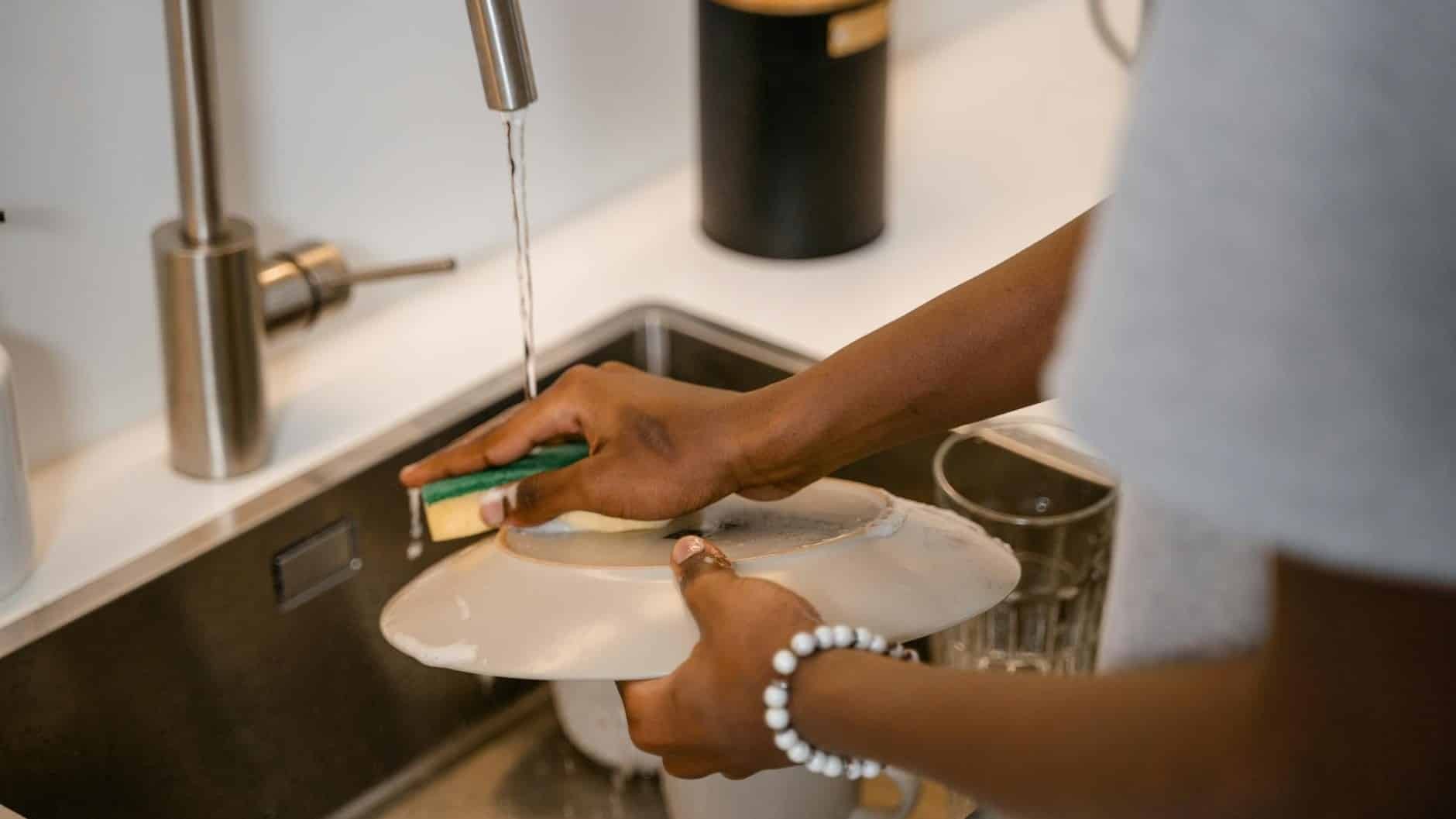
It sits in a box. Place it between the milk can and the dishwashing detergent. That green scouring pad has been a default kitchen tool for decades. We use it for everything. Pots. Pans. Sinks. Stovetops.
The problem is simple. It destroys everything it touches.
Those green abrasive sides do more than just clean surfaces. They are scratching stainless steel. This reality applies to almost all shiny surfaces in your kitchen. These sponges can cause irreversible damage. One hard rub is enough to permanently damage stainless steel. Every pass leaves microscopic cuts that are invisible to the naked eye. But they accumulate. After two years of daily cleaning, that brand-new stainless steel pan looked like dull, scratched metal.
What most people ignore is that these scratches aren’t just cosmetic. Using a green scouring pad on stainless steel can cause microscopic scratches. These scratches hold dirt and promote biofilm formation. A biofilm is a bacterial colony protected by an organic matrix. Once formed, these biofilms are difficult to remove. They are more resistant to cleaning and disinfecting agents than the bacteria themselves. They cause cross-contamination. What you thought you were cleaning, you were actually contaminating.
Why the Green Side Is Damaging Your Cookware
Green pads are popular because they can wipe away grease and food. On that front, it’s hard to argue with effectiveness. It does exactly what it was designed to do. To avoid the risk of scratching, use these sponges only on resistant surfaces. For fragile surfaces such as stainless steel, glass and porcelain, you should choose a non-abrasive white sponge. The problem is that nobody reads that nuance. You grab the nearest green sponge. You rub. You repeat tomorrow.
Microscopic scratches appear gradually. The pan loses its shine. Metal particles can even rust on the surface. Limescale settles into those micro-cuts. After three months, your pot will look the same as it did 10 years ago. It just hasn’t been well maintained. The real cost of green pads is premature replacement of your utensils. A cookware set that should last twenty years lasts only five.
Stainless steel cleaning should always be done with the grain. Stainless steel has a grain. These are fine striations oriented in a specific direction and visible in low-angle light. Rubbing the structure creates microscopic scratches that darken the surface permanently. With the help of the green pillow, you can massage in all directions at once. The result is inevitable.
Microfiber: the material that changes everything
This solution has been in use since the 1990s. Japanese scientists invented microfiber for the textile industry in the 1950s. It started to be used for cleaning in the early 1990s. Thirty years later, its superiority over stainless steel green pads has been documented. However, the big green sponge are still the norm in French kitchens.
Microfiber is a synthetic fiber consisting of very fine fibers. They are up to 100 times finer than a human hair. The unique structure of microfiber makes it very effective at trapping dust, dirt and even bacteria. This is not brutal friction. It’s all about surface area. Millions of tiny hooks capture dirt without damaging surfaces.
Microfiber cloths are distinguished by their ability to trap dust and remove up to 99.999% of bacteria with just water. This performance is based on the ultra-fine structure of the fibers. They are a thousand times finer than a hair. Removes deep dirt and grease without scratching even delicate surfaces such as stainless steel.
Stainless steel is a demanding surface. It marks at the slightest trace of limescale or grease. Due to the density of the fibers, microfiber fabrics can be lightly sanded mechanically. Remove fingerprints and restore shine with a small amount of water. No chemical polishing required. There are no products. No residue. There are no entries.
The hidden costs of abrasive cleaning
We consider ourselves efficient. I thought we were cleaning things up. But we sacrifice long-term sustainability for short-term work. A green pad is a quick fix. This is a lazy way. It obscures the true condition of the kitchenware. I see a dirty pot. Grab the green surface. Rub it hard, won’t you? After 5 minutes the pot looked better. Then microscopic scratches started to appear. The biofilm takes root. Steel weakens.
Consider the alternatives. Microfiber does not require harsh chemicals. There is no need to rub vigorously. It has to do with physics, not strength. It removes dirt. It traps bacteria. The surface remains intact. Cooking utensils last longer. Your kitchen will be healthier. You feel more at peace inside.
Why do we grab green worms? way. fit. tradition. But tradition cannot protect stainless steel. Such is the physics.
Switch to non-abrasive cleaning
To change, you need to change your mindset a little bit. You no longer have to struggle with your appearance. You start working with them. Microfiber cloths are available in many different weights and textures. For general cleaning, a regular microfiber cloth is effective. A microfiber washer may be needed for more demanding jobs. But it’s not a stainless steel green polishing pad.
Your savings will be added to your account. Buy fewer replacement pots. Spend less on harsh chemicals. You spend more time enjoying your kitchen than maintaining it. This is a realistic choice. This is a smart approach.
The green carpet disappears. It is an outdated tool in modern kitchens. The science is clear. The results are visible. The choice is yours.
What this really looks like: Cleaning stainless steel
Most people think that stainless steel requires an abrasive to really clean it. This is a misunderstanding. With the help of special microfiber scrubbing pads, you can precisely clean these surfaces without damaging them. Think dry eggs or chocolate stuck to the pan. Double-sided microfiber cloths can solve this problem in a surprising grace. One side has the grit for scrubbing. The other is soft enough to dry and absorb moisture.
This replaces both tools. Green polishing pad. basic sponge. Gone.
The difference in durability is clear. Microfiber cloths withstand more than 500 machine washes. The cleaning power is also does not lose its. If used daily and washed twice a week, the fabric will last more than 5 years. Compare it to a green scouring pad. After a few weeks it will be thrown in the trash. It makes a big difference in waste.
The hidden economy of microfiber
These cloths are not cheap upfront of these fabrics is not cheap. Cotton fabric is cheaper at checkout. But microfiber saves money in other ways. No soap required. No chemical detergents required. Fibers work through friction and static electricity. Significant savings in cleaning product costs Over five years.
Soaking is the solution to burnt-on residue of stainless steel, carbon build-up or stubborn oil stains. Fill a basin with water. Add a little soap. A few drops of degreaser or rubbing alcohol will help. Let it sit. The water breaks down the bond. Microfiber gets the job done. Never remove the green scouring pad out of the drawer.
Why experts choose this method
There are structural reasons for this priority. Microfibers are produced using a water needling process. The fibers are tightly intertwined and do not fray. A looped towels breaks down. They leave lint behind. Non-woven microfiber ensures zero-particulate wiping.
This is why hospitals and professional kitchens prefer these materials. Cleanliness is important. Hygiene is important. If it’s good enough for a restaurant kitchen, it’s good enough for yours.
Source: cleanservicesa.eu |bluesongrand.com